
HiLIFE / Biomedicum Helsinki Seminar
June 1, 2026
- Date
- 01.06.2026
- Time
- 13:00 - 14:00
- Location
- Biomedicum Helsinki, lecture hall 2
- Organisation
- Helsinki Institue of Life Science HiLIFE
- Contact person
- hilife-seminars@helsinki.fi
Pioneering gene therapies for inherited retinal diseases: lessons from first‑in‑human trials
Professor Robert E. MacLaren from the Nuffield Laboratory of Ophthalmology, Department of Clinical Neurosciences, University of Oxford; Oxford Eye Hospital, Oxford University Hospitals NHS Foundation Trust, UK will give a talk in the HiLIFE seminar series on June 1st at 13.00-14.00.
Prof. MacLaren will give his talk in Hall 2 (Biomedicum 1, Haartmaninkatu 8).
Coffee and pulla will be served to the participants in front of the lecture hall 30 minutes before the seminar begins.
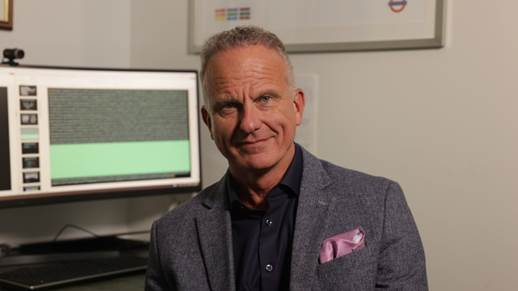
Professor Robert E. MacLaren is a world‑leading ophthalmic surgeon and pioneering researcher whose work has transformed the field of retinal gene and cell therapy. Currently Professor of Ophthalmology at the University of Oxford, he has held senior clinical and academic positions since 2009 and has played a central role in bringing experimental genomic medicine into clinical practice.
Professor MacLaren’s scientific career began with a DPhil at the University of Oxford on optic nerve regeneration, followed by extensive clinical training in ophthalmology and vitreoretinal surgery at the Moorfields Eye Hospital and other leading UK centres. His dual expertise in basic neuroscience and complex retinal surgery uniquely positioned him to lead translational advances at the interface of molecular therapy and clinical ophthalmology.
He is internationally recognized for developing and leading several first‑in‑human retinal gene therapy trials. His landmark work includes the pioneering choroideremia gene therapy trial and subsequent clinical programs targeting RPGR‑associated X‑linked retinitis pigmentosa and dry age‑related macular degeneration. His group also demonstrated the first proof‑of‑concept photoreceptor transplantation in humans and has advanced innovative approaches including robotic intraocular surgery and electronic retinal implants.
Beyond academia, Prof. MacLaren has catalysed the commercial translation of gene therapy through founding roles in two biotechnology companies, the Nightstar Therapeutics and Beacon Therapeutics, collectively raising over $1.3 billion to advance treatment pipelines toward global availability.
His impact extends strongly to Finland. Since 2018 he has led Finland’s first retinal gene therapy procedures, trained Finnish surgeons, co‑supervised research programs at the University of Helsinki, and enabled Finnish participation in multiple phase III clinical trials. Currently he collaborates with Finnish scientists to develop gene therapy for CERKL-associated retinopathy – one of the most common causes of inherited vision loss in Finland.
Professor MacLaren’s career exemplifies scientific innovation, clinical translation, and deep international partnership, establishing him as one of the foremost figures shaping the future of clinical gene therapy.
Welcome to this exciting seminar!
Maria Kaukonen
Selected publications
MacLaren RE et al.,Nature 2006 Nov 9;444(7116):203-7. Retinal repair by transplantation of photoreceptor precursors. doi: 10.1038/nature05161.
MacLaren RE et al.,Nature Medicine 2023 Oct;29(10):2464-2472. Subretinal timrepigene emparvovec in adult men with choroideremia: a randomized phase 3 trial. doi: 10.1038/s41591-023-02520-3.
Cehajic-Kapetanovic J, …, MacLaren RE. Nature Medicine 2020 Mar;26(3):354-359. Initial results from a first-in-human gene therapy trial on X-linked retinitis pigmentosa caused by mutations in RPGR. doi: 10.1038/s41591-020-0763-1.
Edwards TL, …, MacLaren RE. Nature Biomedical Engineering 2018 Jun 18:2:649-656. First-in-human study of the safety and viability of intraocular robotic surgery. doi: 10.1038/s41551-018-0248-4.
MacLaren RE et al., Lancet 2014 Mar 29;383(9923):1129-37. Retinal gene therapy in patients with choroideremia: initial findings from a phase 1/2 clinical trial. doi: 10.1016/S0140-6736(13)62117-0.